Explore how growing altitude influences coffee bean flavor. Understand why high-altitude beans often have complex and vibrant notes.
Explore how growing altitude influences coffee bean flavor. Understand why high-altitude beans often have complex and vibrant notes.
The Impact of Altitude on Coffee Bean Flavor
Understanding Coffee Terroir The Role of Elevation
When we talk about coffee, we often hear terms like 'single origin,' 'Arabica,' or 'Robusta.' But one of the most significant, yet often overlooked, factors influencing a coffee bean's flavor profile is the altitude at which it's grown. Just like wine grapes, coffee beans are profoundly affected by their 'terroir' – the complete natural environment in which a particular coffee is produced, including factors like soil, topography, and climate. And within climate, altitude plays a starring role.
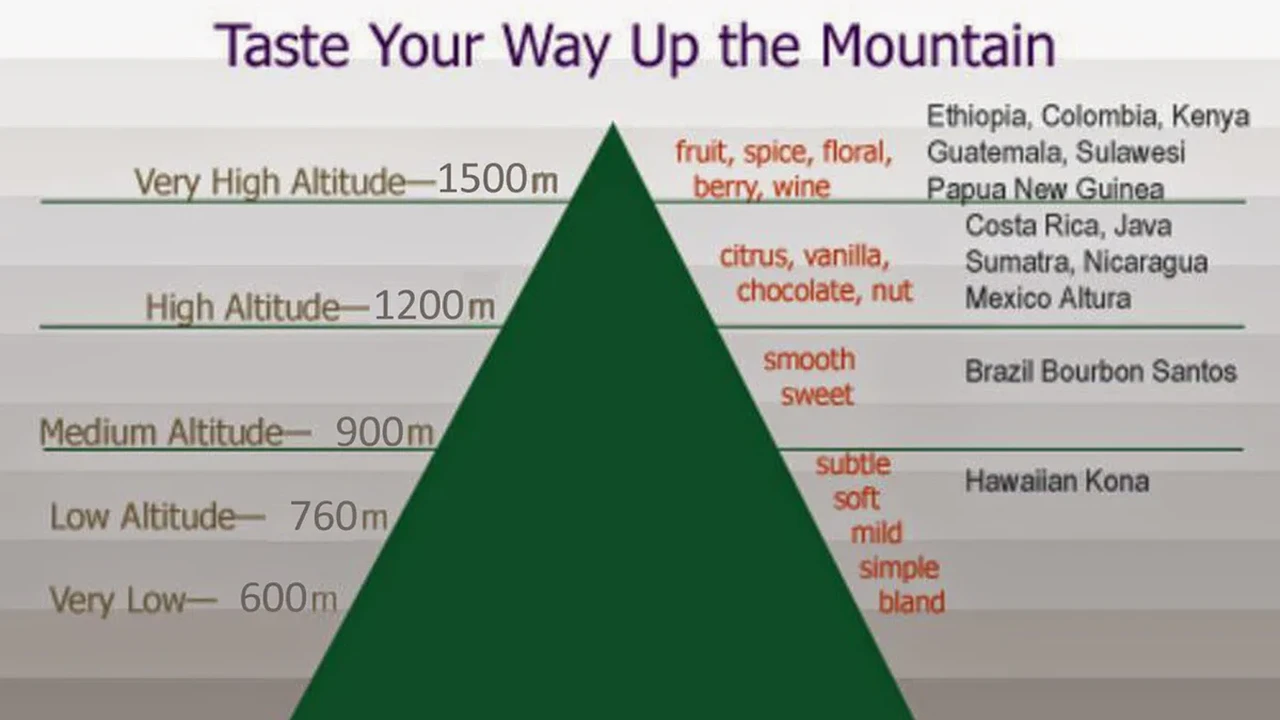
Think of it this way: coffee plants grown at higher altitudes experience a unique set of environmental conditions that stress the plant in a beneficial way. This stress leads to slower maturation of the coffee cherries, allowing them to develop more complex sugars, acids, and aromatic compounds. The result? A denser, harder bean packed with more nuanced flavors.
High Altitude Coffee Characteristics What to Expect
So, what exactly does 'high altitude' mean for your cup of coffee? Generally, coffee grown above 1,200 meters (approximately 4,000 feet) is considered high altitude. However, the sweet spot for truly exceptional coffee often lies even higher, sometimes reaching up to 2,000 meters (around 6,500 feet) or more, depending on the region.
Here's a breakdown of the typical characteristics you can expect from high-altitude coffee:
Acidity and Brightness High Altitude Coffee Acidity
One of the most defining features of high-altitude coffee is its vibrant, often sparkling acidity. This isn't the sour, unpleasant acidity you might associate with stale coffee. Instead, it's a clean, bright, and often fruity acidity that adds complexity and liveliness to the cup. Think of the tartness of a green apple or the zest of a lemon – that's the kind of acidity we're talking about. This is due to the slower maturation process, which allows for a greater development of organic acids like citric, malic, and tartaric acids.
Flavor Complexity and Nuance High Altitude Coffee Flavor Profiles
Because of the extended maturation period, high-altitude beans have more time to develop a wider range of complex flavors. You'll often find notes that are floral, fruity (berries, citrus, stone fruit), wine-like, or even chocolatey and nutty, but with a distinct clarity. These flavors are not just present; they are often layered and evolve as the coffee cools, offering a more dynamic tasting experience.
Body and Mouthfeel High Altitude Coffee Body
While not always universally true, high-altitude coffees often exhibit a lighter to medium body. This isn't a negative; rather, it complements their bright acidity and complex flavors, preventing the coffee from feeling heavy or overwhelming on the palate. The mouthfeel is often described as silky, clean, or tea-like.
Aroma and Fragrance High Altitude Coffee Aroma
The aroma of high-altitude coffee is typically more intense and fragrant. Before you even take a sip, you'll often notice captivating scents that hint at the flavors to come – floral notes, sweet fruit, or even spicy undertones. This is a direct result of the increased concentration of aromatic compounds within the denser bean.
Bean Density and Hardness High Altitude Coffee Bean Density
High-altitude beans are typically denser and harder than their low-altitude counterparts. This density is a direct result of the slower growth and maturation. Denser beans are often preferred by roasters because they can withstand higher roasting temperatures and longer roast times without scorching, allowing for a more even and controlled development of flavor.
Why Altitude Matters The Science Behind the Flavor
Let's delve a bit deeper into the environmental factors at play at higher elevations that contribute to these desirable coffee characteristics:
Lower Temperatures and Slower Maturation Coffee Growth at Altitude
At higher altitudes, temperatures are generally cooler. This cooler climate slows down the metabolic processes of the coffee plant. The coffee cherries take longer to ripen, sometimes several weeks or even months longer than those grown at lower elevations. This extended ripening period is crucial because it allows the coffee bean inside the cherry more time to develop complex sugars, acids, and aromatic compounds. It's like slow-cooking a meal – the longer it simmers, the more flavors meld and deepen.
Reduced Oxygen Levels and Plant Stress Coffee Plant Stress
Lower atmospheric pressure and reduced oxygen levels at higher altitudes create a mild stress for the coffee plant. In response to this stress, the plant produces more sugars and complex carbohydrates, which act as a kind of antifreeze and energy reserve. These increased sugars directly translate to sweeter, more flavorful coffee beans.
Better Drainage and Soil Conditions High Altitude Soil
Mountainous regions often provide excellent natural drainage, preventing waterlogging which can be detrimental to coffee roots. The soil in these areas can also be rich in volcanic minerals, contributing to the unique nutrient profile absorbed by the coffee plants. This combination of good drainage and nutrient-rich soil further supports the development of healthy, flavorful beans.
Less Pests and Diseases High Altitude Pest Control
Cooler temperatures at higher altitudes also mean fewer pests and diseases. Many common coffee pests, like the coffee berry borer, thrive in warmer climates. This reduced pest pressure means less need for pesticides, leading to healthier plants and often, more naturally grown coffee.
Regional Examples and Specific Coffee Recommendations
Now that we understand the 'why,' let's look at some famous coffee-growing regions known for their high-altitude beans and some specific products you might want to try. Keep in mind that prices can vary significantly based on origin, processing, and retailer.
Ethiopia Yirgacheffe The Birthplace of Coffee
Ethiopia is widely considered the birthplace of coffee, and its high-altitude regions produce some of the most celebrated beans in the world. Yirgacheffe, in particular, is renowned for its washed process coffees, often grown at altitudes between 1,700 and 2,200 meters (5,500-7,200 feet).
* Flavor Profile: Expect bright, floral notes (jasmine, bergamot), intense citrus (lemon, lime), and a delicate, tea-like body. They often have a clean, crisp finish.
* Typical Use: Excellent for pour-over, AeroPress, or any method that highlights delicate flavors.
* Recommended Product:
* Happy Mug Coffee Ethiopian Yirgacheffe Adado (Whole Bean): Known for its consistent quality and vibrant floral and citrus notes. Often priced around $15-20 for 12oz. Great for those new to high-altitude Ethiopian coffees.
* Counter Culture Coffee Ethiopian Yirgacheffe (Whole Bean): A well-respected roaster offering a high-quality, often single-farm or co-op specific Yirgacheffe. Expect bright acidity and complex floral and fruity notes. Price typically $18-22 for 12oz.
Colombia Supremo High Grown Colombian Coffee
Colombia is famous for its 'mild' coffees, and a significant portion of its production comes from high-altitude regions in the Andes mountains, often above 1,500 meters (5,000 feet). 'Supremo' is a grading term indicating the largest bean size, often associated with higher quality.
* Flavor Profile: Generally well-balanced with medium body, bright acidity, and notes of chocolate, caramel, and sometimes red fruit. They are often very approachable and versatile.
* Typical Use: Versatile for drip coffee, French press, and even espresso.
* Recommended Product:
* Volcanica Coffee Colombian Supremo (Whole Bean): A popular choice for its classic Colombian profile – smooth, rich, with notes of chocolate and citrus. Around $16-20 for 16oz. Good for everyday brewing.
* Peet's Coffee Colombia Luminosa (Whole Bean): While not always explicitly 'Supremo,' Peet's sources high-grown Colombian beans for this blend, offering a bright, sweet, and floral cup. Price around $12-15 for 12oz.
Kenya AA Complex and Fruity Kenyan Coffee
Kenyan coffees are highly prized for their intense, complex flavors and vibrant acidity. Most Kenyan coffee is grown at altitudes between 1,400 and 2,000 meters (4,500-6,500 feet). The 'AA' grading indicates a large bean size, often correlating with higher quality.
* Flavor Profile: Known for their distinctive blackcurrant or tomato-like acidity, bright citrus notes, and a rich, wine-like body. They are often very juicy and complex.
* Typical Use: Best enjoyed as pour-over or drip to highlight their unique acidity and fruitiness.
* Recommended Product:
* Blue Bottle Coffee Kenya Nyeri (Whole Bean): Blue Bottle often features excellent Kenyan single origins, showcasing their characteristic bright acidity and complex fruit notes. Expect to pay around $20-25 for 12oz.
* Sweet Maria's Kenya AA (Green Coffee Beans): For the home roaster, Sweet Maria's offers a variety of high-quality green Kenyan AA beans, allowing you to roast to your preference. Prices vary but typically $7-10 per pound.
Guatemala Antigua Volcanic Soil Coffee
The Antigua region of Guatemala is famous for its coffee grown on volcanic slopes at altitudes ranging from 1,500 to 1,700 meters (5,000-5,600 feet). The rich volcanic soil and consistent climate contribute to its distinctive profile.
* Flavor Profile: Typically full-bodied with a rich, chocolatey sweetness, bright acidity, and often notes of spice or nuts. They are very well-balanced and satisfying.
* Typical Use: Excellent for drip, French press, and can make a very pleasant espresso.
* Recommended Product:
* Starbucks Reserve Guatemala Antigua (Whole Bean): While Starbucks has a wide range, their Reserve line often features higher-quality, single-origin beans like Antigua, offering a classic, balanced profile. Price around $18-22 for 16oz.
* Intelligentsia Coffee Guatemala Antigua Finca El Injerto (Whole Bean): El Injerto is a highly acclaimed farm, and Intelligentsia often sources from them, providing a premium, nuanced Antigua experience. Expect higher prices, around $25-30 for 12oz.
Sumatra Mandheling Indonesian High Altitude Coffee
While many Indonesian coffees are known for their earthy, low-acid profiles, Sumatra Mandheling, particularly those grown at higher altitudes (often 1,000-1,500 meters or 3,300-5,000 feet), can offer a more refined and complex experience, especially with the unique Giling Basah (wet-hulled) processing method.
* Flavor Profile: Full-bodied, low acidity, with earthy, woody, and sometimes spicy notes. Can also have hints of dark chocolate or tobacco. The higher altitude versions tend to be cleaner and less 'muddy' than lower-grown Sumatrans.
* Typical Use: Ideal for French press, cold brew, or as a base for espresso blends due to its heavy body.
* Recommended Product:
* Coffee Bean Direct Sumatra Mandheling (Whole Bean): A reliable source for a classic Sumatra profile, often at a good value. Around $15-18 for 16oz. Good for those who prefer a bolder, earthier cup.
* Klatch Coffee Sumatra Mandheling (Whole Bean): Klatch often offers a more refined take on Sumatra, highlighting its unique characteristics with careful roasting. Price around $18-22 for 12oz.
The Roaster's Role Maximizing High Altitude Potential
Even with the best high-altitude beans, the roaster plays a critical role in bringing out their full potential. Because high-altitude beans are denser, they require a different roasting approach compared to lower-grown, less dense beans. A skilled roaster will understand how to apply heat to these denser beans to ensure an even roast from the inside out, developing those complex sugars and acids without scorching the exterior.
Many specialty coffee roasters specifically seek out high-altitude beans because they offer a wider canvas for flavor development. When you see a roaster highlighting the altitude of their beans, it's often a good sign that they understand and appreciate the nuances these beans can offer.
Brewing High Altitude Coffee Tips for Optimal Flavor
To truly appreciate the delicate and complex flavors of high-altitude coffee, your brewing method matters. Here are a few tips:
Precision is Key Brewing High Altitude Coffee
Because these coffees are so nuanced, precision in brewing will yield the best results. Use a coffee scale to measure your beans and water accurately. A good starting point is a 1:15 or 1:16 coffee-to-water ratio (e.g., 15g coffee to 225g water).
Grind Size Matters High Altitude Coffee Grind
Adjust your grind size to match your brewing method. For pour-over, a medium-fine grind is usually ideal. For French press, a coarser grind. The goal is to achieve an even extraction that highlights the coffee's natural acidity and sweetness without over-extracting bitterness.
Water Quality High Altitude Coffee Water
Since high-altitude coffees often have delicate flavors, the quality of your water is paramount. Filtered water, free from strong odors or tastes, will allow the coffee's true characteristics to shine through. Avoid distilled water, as it lacks the minerals needed for proper extraction.
Temperature Control High Altitude Coffee Temperature
Brewing temperature is also important. Aim for water between 195°F and 205°F (90°C and 96°C). Too hot, and you risk over-extracting bitterness; too cool, and you might under-extract, leading to a flat or sour taste.
Brewing Methods High Altitude Coffee Brewing Methods
Methods that highlight clarity and delicate flavors, such as pour-over (e.g., Hario V60, Chemex), AeroPress, or even a well-calibrated drip machine, are often excellent choices for high-altitude coffees. These methods allow the bright acidity and complex aromatics to come to the forefront.
The Future of High Altitude Coffee Climate Change Concerns
While high-altitude regions currently offer ideal conditions for specialty coffee, climate change poses a significant threat. Rising global temperatures mean that the 'coffee belt' – the region where coffee can be grown – is shifting. Farmers may need to move their crops to even higher elevations to find suitable conditions, which presents challenges in terms of available land, infrastructure, and environmental impact.
Supporting sustainable and ethically sourced high-altitude coffees is more important than ever. By choosing coffees from producers who are implementing climate-resilient practices, you're not only enjoying a superior cup but also contributing to the longevity of these unique coffee-growing regions.
Exploring Your Own High Altitude Coffee Journey
So, the next time you're choosing coffee, take a moment to consider the altitude at which it was grown. It's a powerful indicator of the potential flavor complexity and vibrancy you can expect in your cup. Experiment with different high-altitude origins – from the floral notes of Ethiopia to the bright fruitiness of Kenya or the balanced sweetness of Colombia. Each region offers a unique expression of how elevation shapes the bean.
Embrace the journey of discovery. Pay attention to the tasting notes provided by roasters, and don't be afraid to try new things. You might just find your new favorite coffee, one that transports you to the misty mountains where it was carefully cultivated. Happy brewing!
:max_bytes(150000):strip_icc()/277019-baked-pork-chops-with-cream-of-mushroom-soup-DDMFS-beauty-4x3-BG-7505-5762b731cf30447d9cbbbbbf387beafa.jpg)